

研究室の紹介our laboratory
佐藤研究室へようこそ
佐藤研究室では、「物質における幾何学性」をキーワードに、固体中の電子やスピンがつくる新しい状態や、その機能性の解明に取り組んでいます。固体物理の基礎的な知見をベースにしながら、有機化学やデバイス工学などさまざまな分野の視点を取り入れて「幾何学性」を自在に制御し、面白い物理現象を見つけ出すことが目標です。
「本当に新しい物理とは何か?」という問いに対して、学生と教員が一緒に考え、それぞれのアイディアを大切にしながら研究を進めていきます。また、研究を通して専門知識を身につけるだけでなく、課題を見つける力、じっくり考える力、そして成果を分かりやすく伝える力を育てることも大切にしています。好奇心を持って、自分で考えることを楽しめる方を、私たちは強く歓迎します。
当研究室では大学院生(修士 / 博士)、ポスドクを募集しています。ご興味のある方は、ぜひお気軽にご連絡ください。
Welcome to Sato Laboratory
We explore novel states of matter created by electrons and spins in solids, as well as their functionalities, with a focus on “geometric aspects in materials.” Building on fundamental concepts in solid-state physics, we incorporate perspectives from organic chemistry, device engineering, and other fields to flexibly control geometric properties and uncover intriguing physical phenomena. In addressing the question, “What is truly new physics?”, students and faculty work closely together, valuing each individual’s ideas while advancing research. Through this process, we aim not only to develop expertise in the field, but also to cultivate the ability to identify problems, think deeply, and communicate results clearly. We warmly welcome those who are curious and enjoy thinking independently.
研究の内容research areas
固体中にひしめく膨大な数の電子のふるまいは、その背後にある結晶構造から大きな影響を受けます。言い換えると、結晶構造やデバイス構造といった幾何構造をうまく設計・制御することで、電子集団のふるまいを自在に引き出せる可能性があります。さらに、通常は観測が困難な、非平衡・非線形な現象にも光を当てることができるかもしれません。
これまで私たちは、このような視点のもとで、構造を精密に制御できる有機物質や、デバイス応用と相性の良い無機物質、さらにはそれらを組み合わせた有機デバイスを用いながら、さまざまな新しい電子状態や機能性を見つけ出し、その原理実証を行っています。
The behavior of the vast number of electrons in solids is strongly influenced by the underlying crystal structure. In other words, by carefully designing and controlling crystal and device structures, it becomes possible to bring out and tune the collective behavior of electrons. This also opens up opportunities to explore nonequilibrium and nonlinear phenomena that are usually difficult to observe.
From this perspective, we have been studying a variety of systems, including organic materials with highly controllable structures, inorganic materials well suited for device applications, and hybrid organic devices that combine these approaches. Through these efforts, we have been exploring a wide range of novel electronic states and functionalities.
主に次のようなテーマに取り組んでいます。
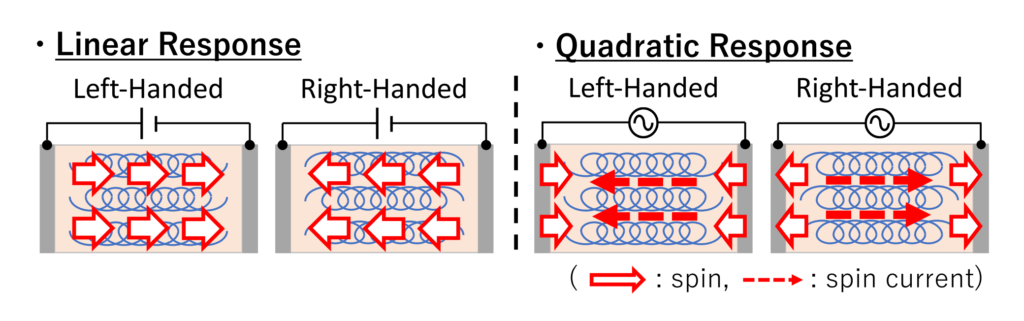
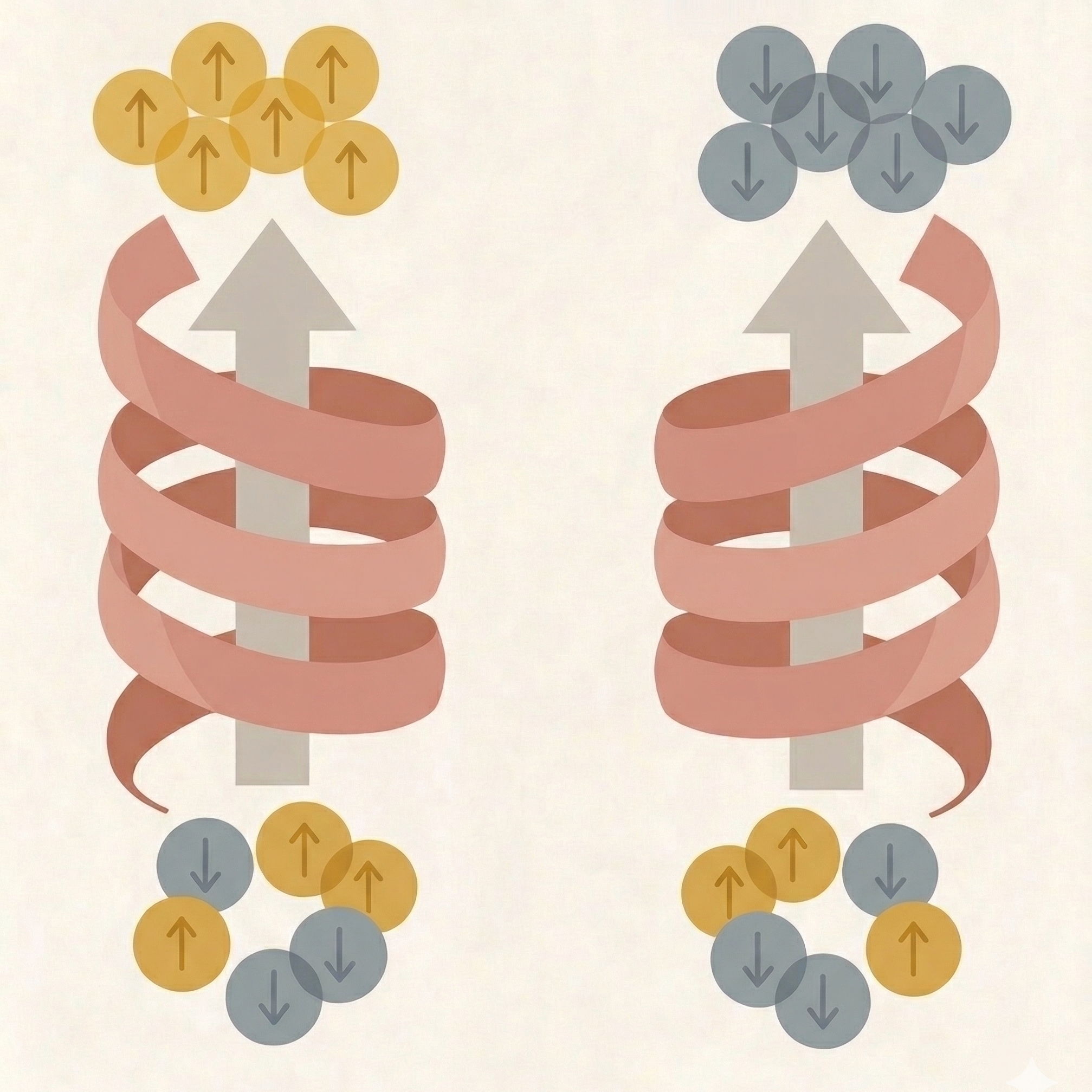
- ねじれた構造に代表されるキラリティが生む、CISS効果(Chirality-induced spin selectivity)の研究
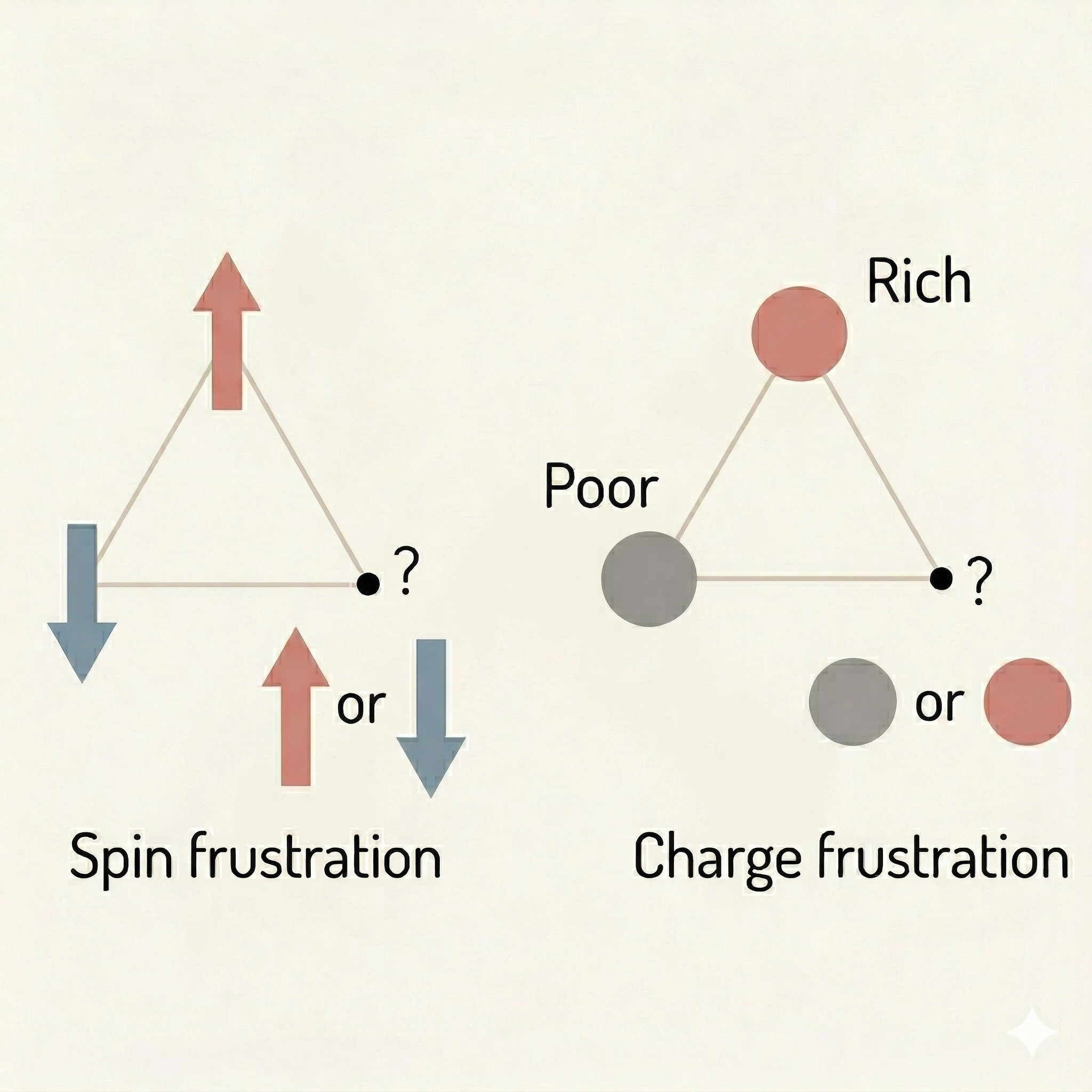
- 三角格子が作るフラストレーション効果と非平衡電子ガラス相の研究
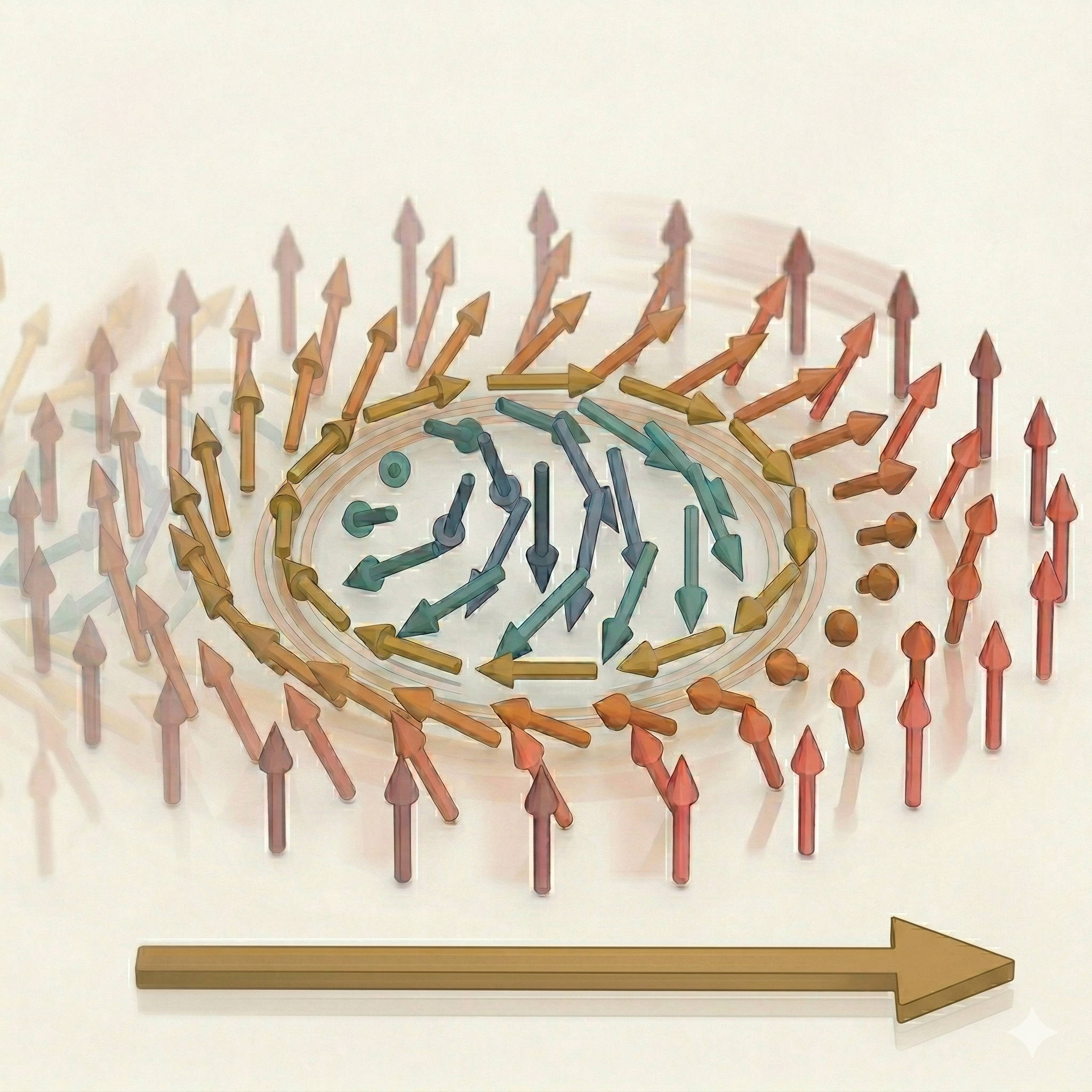
- スキルミオンの集団運動が生む非平衡物性の研究
主要な研究論文publications
Sturdy spin-momentum locking in a chiral organic superconductor
T. Sato, H. Goto, H. M. Yamamoto,
Physical Review Research 7, 023056 (2025).
Nonthermal current-induced transition from skyrmion lattice to nontopological magnetic phase in spatially confined MnSi
T. Sato, W. Koshibae, A. Kikkawa, Y. Taguchi, N. Nagaosa, Y. Tokura, F. Kagawa,
Physical Review B 106, 144425 (2022).
Slow steady flow of a skyrmion lattice in a confined geometry probed by narrow-band resistance noise
T. Sato, W. Koshibae, A. Kikkawa, T. Yokouchi, H. Oike, Y. Taguchi, N. Nagaosa, Y. Tokura, F. Kagawa,
Physical Review B 100, 094410 (2019).
Strange metal from a frustration-driven charge order instability
T. Sato, K. Kitai, K. Miyagawa, M. Tamura, A. Ueda, H. Mori, K. Kanoda,
Nature Materials 18, 229-233 (2019).
Electronic crystal growth
T. Sato, K. Miyagawa, K. Kanoda,
Science 357, 1378-1381 (2017).
研究室の仲間laboratory members
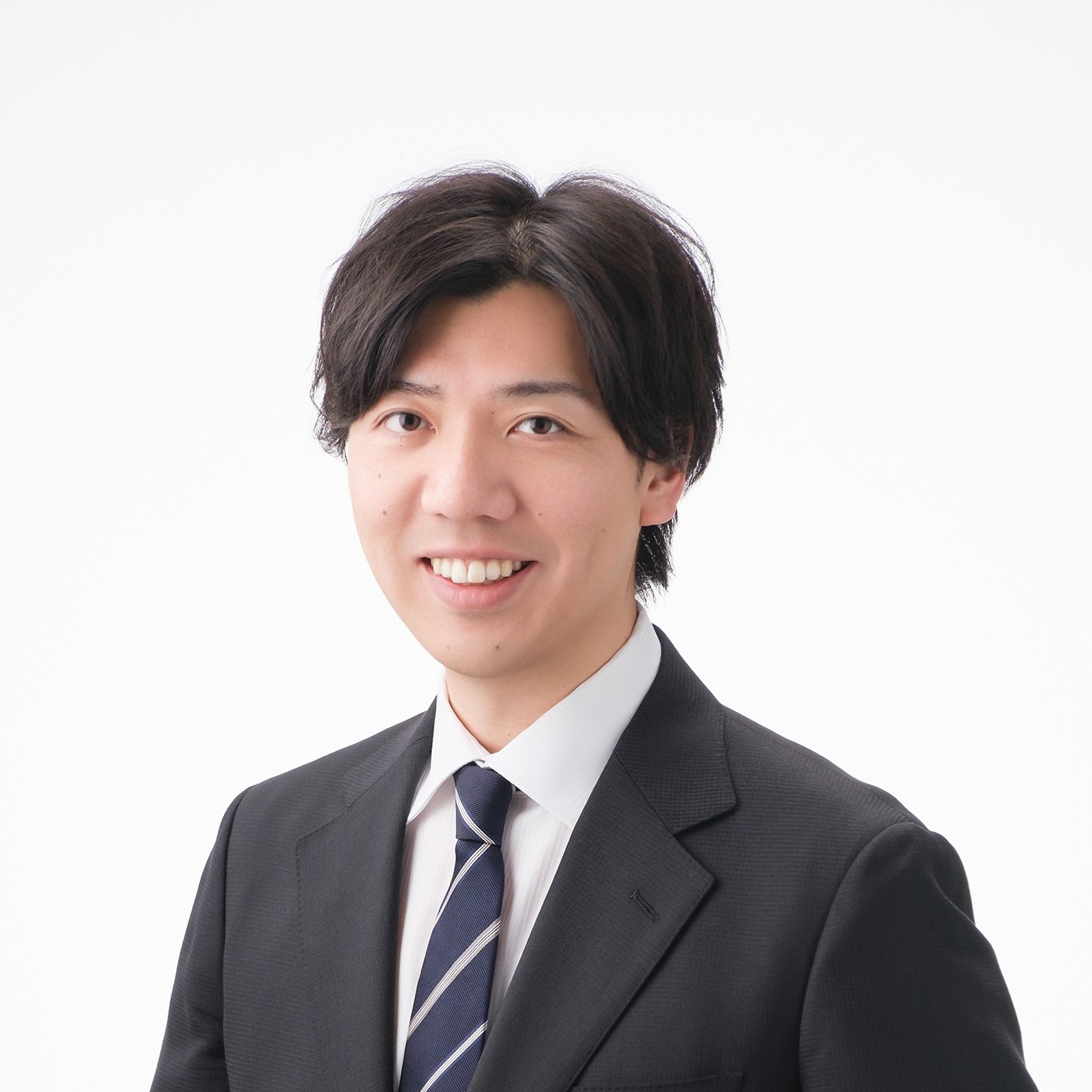
佐藤 拓朗
准教授

Future member
学生

Future member
学生
Accessアクセス
佐藤研究室
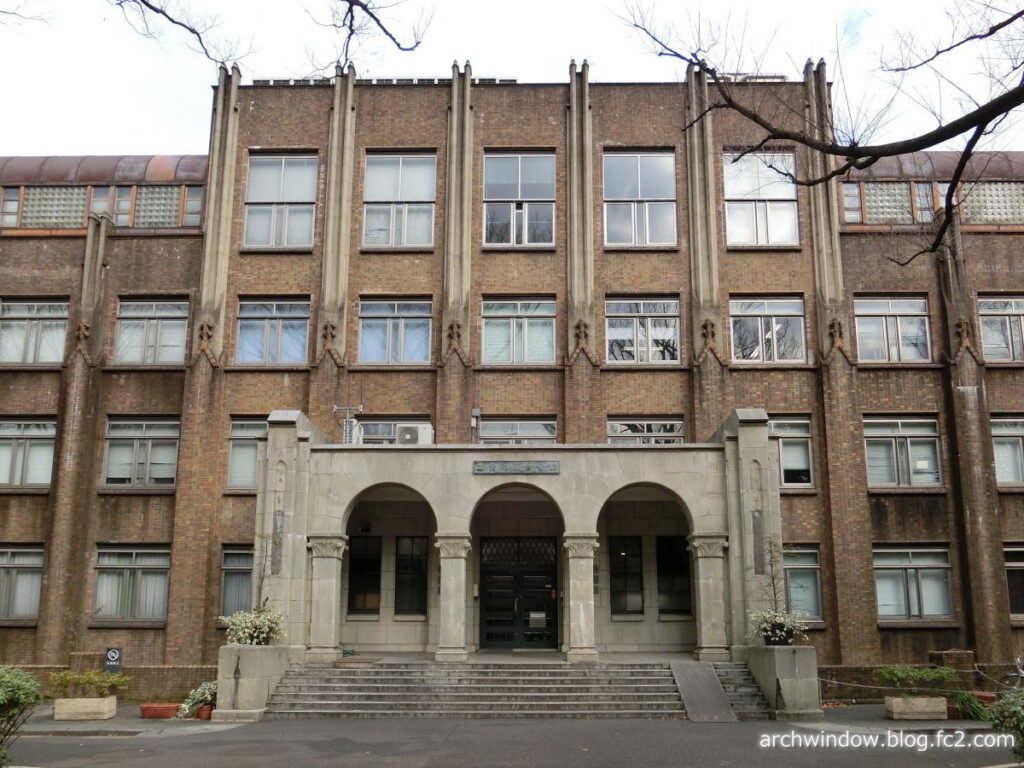
〒113-8656 東京都文京区本郷7-3-1 工学部6号館423号室
E-mail : sato_at_ap.t.u-tokyo.ac.jp
(_at_ はアットマークに変換してください)
Tel : 03-5841-6868
https://www.tsato-lab.com/